
Do You Need More Traffic or a Better Website?
Low enquiries could mean a traffic problem or a conversion problem. Here is how to tell the difference and what to fix first.
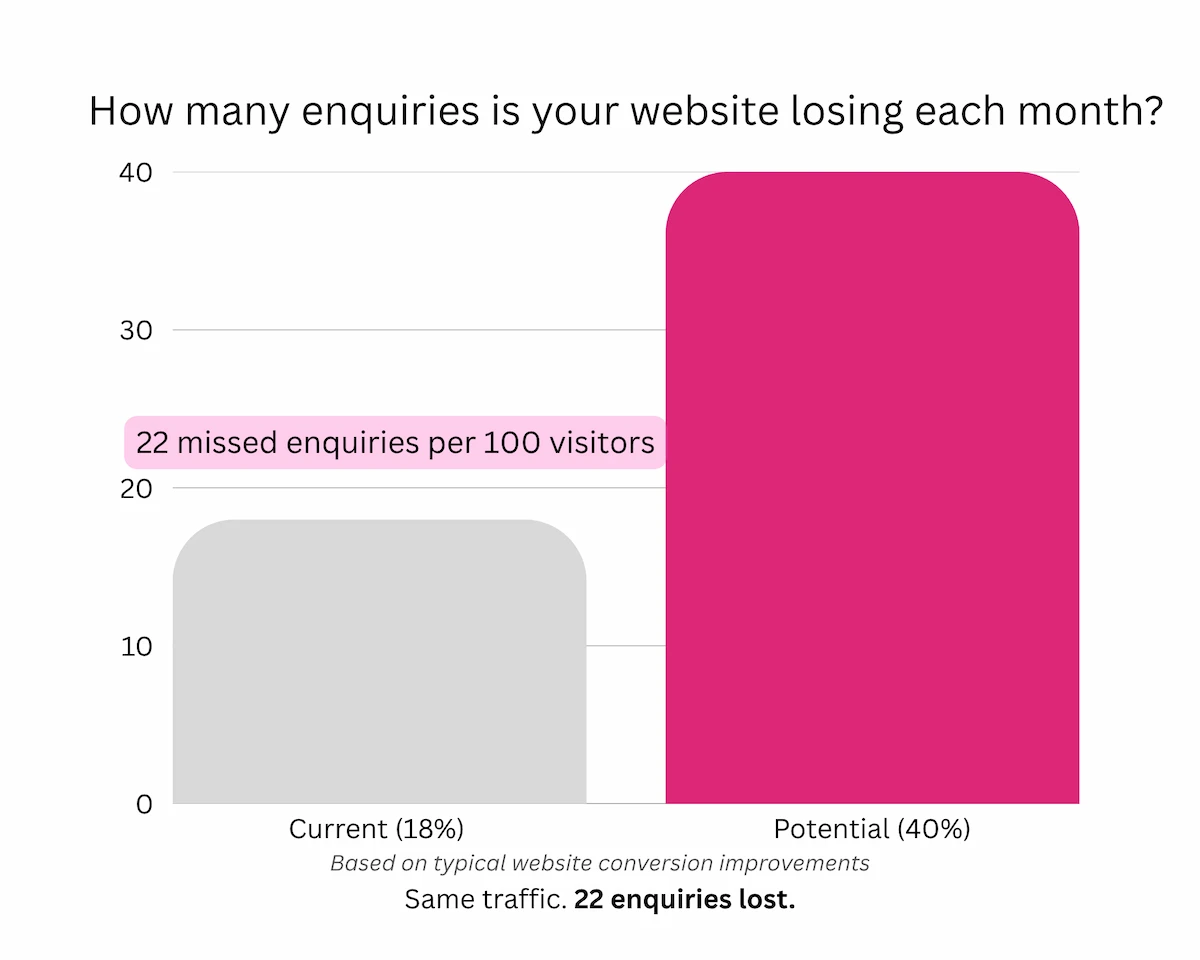
The answer changes everything
When enquiries are low, the first instinct is usually to get more traffic. Run ads. Post on social media. Try SEO.
But if your website is not converting the visitors you already have, more traffic just means more people leaving without getting in touch.
Before you spend money on traffic, you need to know whether the problem is getting people to your site or what happens when they arrive.
How to tell if it is a traffic problem
Open your analytics. If your site is getting fewer than 100 visitors a month, you probably have a traffic problem. People are not finding you.
That could mean:
- Your Google Business Profile is not optimised
- Your site is not ranking for relevant searches
- You are not running any paid campaigns
- Your social media is not driving clicks
If nobody is visiting, the website itself is not the issue yet. You need visibility first. I cover this in detail here: why your business is not showing up on Google in Nantwich and Crewe.
How to tell if it is a conversion problem
If you are getting hundreds of visitors a month but no enquiries, the traffic is not the issue. The website is.
Signs of a conversion problem:
- High bounce rate on key pages
- People visit but do not click through to your contact page
- Time on page is very short
- You are getting ad clicks but no leads
This means people are finding you. They are landing on your site. But something on the page is stopping them from taking the next step.
I break this down here: getting website traffic but no enquiries.
Most small businesses have both
In practice, most businesses around Nantwich and Crewe have a bit of both. Not enough traffic and a website that does not convert the traffic it does get.
The question is which one to fix first.
My advice: fix the website first. There is no point driving more people to a page that does not work. Get the page right, then increase the traffic.
What fixing the website actually means
It does not always mean a full redesign. Sometimes it means:
- Rewriting the headline so it is specific and clear
- Moving the call to action above the fold
- Improving load speed on mobile
- Removing clutter that distracts from the main action
When I improved my own site, the Ahrefs Health Score went from 71 to 91. Load time dropped from 14.2 seconds to 1.8 seconds. Those changes were structural, not cosmetic.
If your website feels like it should work but does not, the structure is usually the issue. I explain this here: why your website feels like it should work but doesn't.
What about Google Ads?
Google Ads can solve a traffic problem quickly. But if your landing page is not converting, you are paying for clicks that go nowhere.
I have seen this first-hand. A £1,250 Google Ads campaign that generated clicks but only one qualified lead. The ads were working. The page was not.
If you are running ads and not getting leads, read this: why your Google Ads get clicks but no leads.
What to do next
Send me your website. I will tell you whether the problem is traffic, conversion, or both, and what to fix first.
Related reading
- You're Getting Website Traffic but No Enquiries. Here's Why
- Why Your Google Ads Get Clicks but No Leads
- Why Your Website Feels Like It Should Work but Doesn't
- Send Me Your Website. What I Actually Look For
FAQ
How do I know if I need more traffic or a better website?
Check your analytics. If you are getting fewer than 100 visitors a month, it is a traffic problem. If you are getting visitors but no enquiries, it is a conversion problem.
Should I fix my website before running ads?
Yes. There is no point paying for traffic if the page those visitors land on does not convert. Fix the page first, then drive traffic to it.
Can I fix both at the same time?
You can, but prioritise the website. A better page will improve results from every traffic source, whether that is organic search, ads, or social media.